
Having spent a decade quietly building one of electronic music's most resilient solo catalogues, it is striking how little of Maya Okonkwo's career has been spent chasing anyone else's tempo. Berlin-based, Lagos-born, stubborn in the way only a working producer can be, she has made a record that asks more questions than it answers — and refuses, politely, to be hurried into answering any of them.
You're a hard person to schedule, my friend. Let's start at the beginning. Where are you, actually, these days?
Mostly Berlin. A studio outside the city. I spend two weeks a year in Lagos and ten days in London and the rest of the time I am in this little container, which I am told is a building. I do not believe them yet.
The new record took three years. What did the last six months look like?
Tense. I had a version of it that was almost done in October. I sat with it for a month and realised it was not the record. I cut six tracks. The label was — let us say polite. They were polite. We finished in March with three new songs that nobody had heard yet. Two of them are the best things on the album.
You record most of your own vocals. Why?
Because the moment a vocalist arrives in the room, you both become a different version of yourselves. That is good for some records. For this one, I wanted to stay alone with the song long enough to find out what it actually wanted. The people I love most singing on records I love most have all said the same thing to me — that they are talking to themselves in the booth.
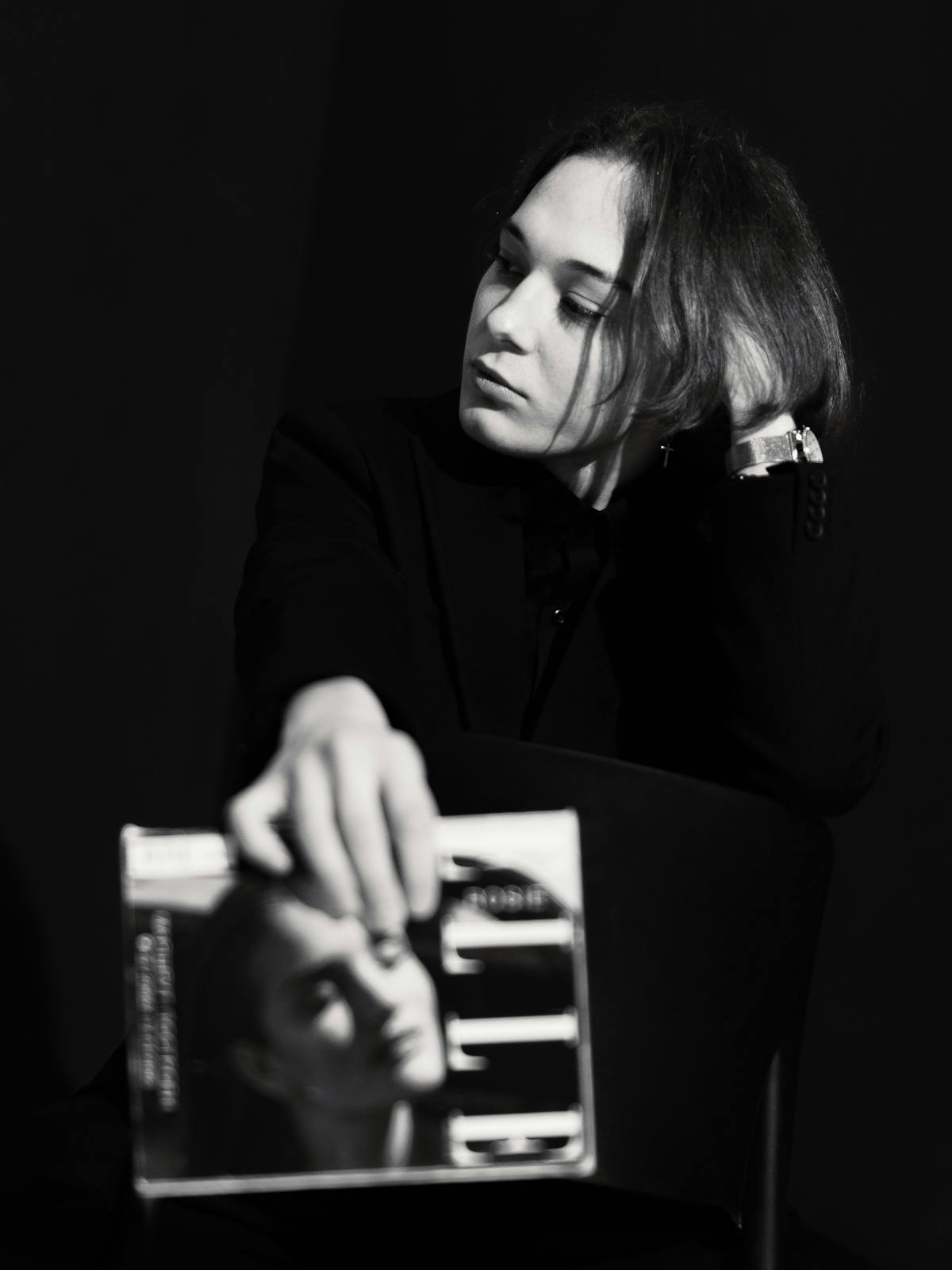
What about the week you sit with a vocal before mixing it?
It is the week the song is doing its work without me. I walk, I cook, I read books I have read before. I try to forget what I just did. If I touch it before then, I will smooth it into the version of itself that I already know how to make. The interesting version is whatever is still there after seven days of me wanting to fix it.
Your peers have gotten famous. Are you worried about being left behind?
No. I am worried about other things. That one I have made peace with. The work is the work. Some of us are early, some are late, some are exactly on time, and most of us do not get to know which until later. The algorithm does not know what I am working on. I think that is what is letting us still surprise each other.

Last one — what would you tell a producer in their first studio?
Get used to your own taste. Not what you want it to be. What it actually is. Most of what is wrong with a young producer's record is them trying to outrun their instincts. You cannot outrun them. Sit down. Be honest. Make the small thing well first.