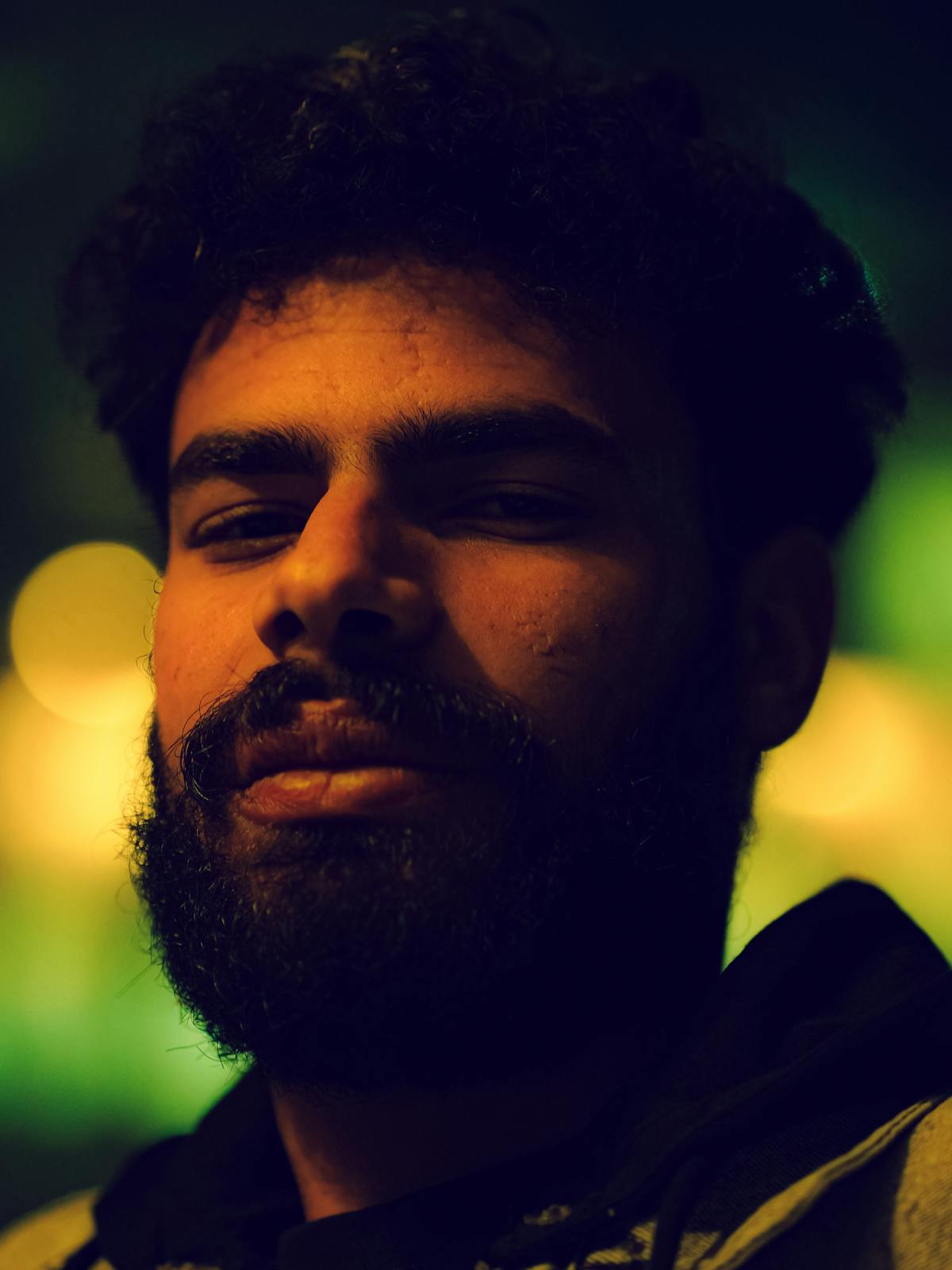
Mira Aspell makes short films almost nobody saw for almost a decade, and now her work has begun to appear in places that startle her — most recently a hotel lobby in a city she has never visited. She is twenty-nine, dressed almost entirely in browns, and explaining, with great patience, why she has deleted the entire previous draft of the film that brought us here.
You deleted a finished film. Walk me through that.
I sat with the cut for a year. I knew the cut was technically fine. I also knew it was a film about wanting to make a film, which is the worst kind of film. So I deleted it. My editor cried. I did not. That is the kind of thing that sounds dramatic and is really just a tuesday.
You rarely operate the camera. Why?
I want to be present without being in charge of the recording. Those are different jobs. People who try to do both usually do neither. I trust the person on the camera. I am usually somewhere just behind their shoulder, watching the subject and not watching the screen.
You talk about the camera as a third person. What does that mean in practice?
It means I do not pretend the camera is invisible. The camera is a person. It is in the room. Everybody in the scene knows it is in the room. The job is to let the camera also have opinions, which mostly means not asking it to lie.
How has your work changed since people started watching?
I worry about it more. That is the honest answer. I am working through it. The longer I make things, the more I have to remind myself that the work is the loud part. Everything around the work is the quiet part, and the quiet part is none of my business.
Tell me about the hotel lobby.
A friend of a friend played a film of mine on a screen in a lobby in Lisbon. I have never been to Lisbon. I do not know what to do with that information. It is, somehow, more nerve-wracking than a premiere.
What would you tell a young filmmaker making their first piece?
Cut your most beautiful shot. Keep going. The film is what is left over.